
Criminal Cases in the Shelby County Courts
Shelby County is Alabama's Eighteenth Judicial Circuit. Circuit Court is the felony trial court. District Court handles misdemeanors, traffic matters outside city jurisdiction, and early felony steps such as preliminary proceedings. A municipal court keeps ordinance cases and qualifying state-law misdemeanors that arose within its police jurisdiction. That split matters because a Hoover, Alabaster, or Pelham municipal case may never become a file at the Shelby County Circuit Clerk.
Circuit and District Criminal and Traffic files share the clerk operation at the Shelby County Courthouse, First Floor, Room 1F, 112 North Main Street in Columbiana. The counter is open Monday through Friday from 8:00 a.m. to 4:30 p.m., including lunch. The main number is 205-669-3760. The criminal supervisor is at 205-670-5266. Staff can route a request when the court or case number is not clear, but the clerk cannot give legal advice.
Search Shelby County Court Dockets
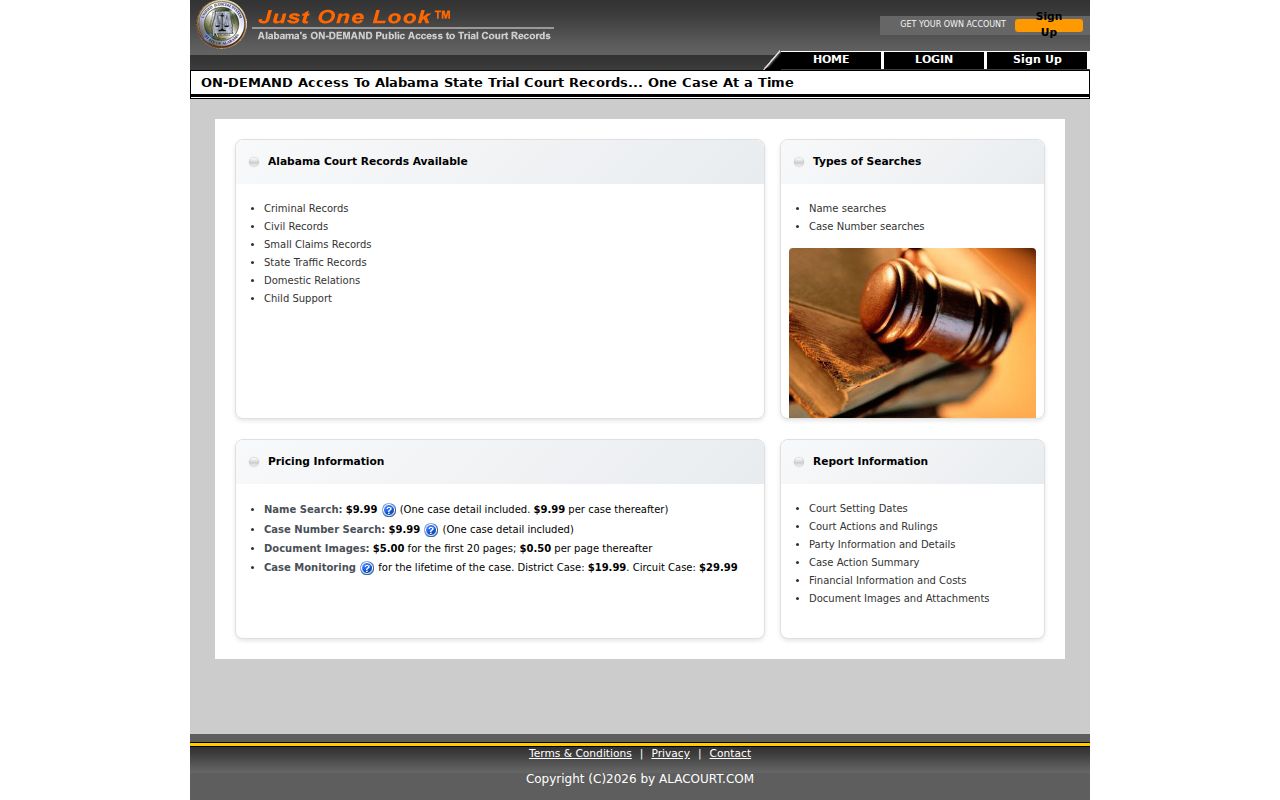
AlacourtACCESS is the Alabama Administrative Office of Courts' paid public portal. It offers Name Search and Case Number Search. Login and payment gates control the detailed screens, so exact post-login options should be read in the live service. The advertised case view can include settings, actions and rulings, party details, the case-action summary, financial costs, images, and attachments.
The official AlacourtACCESS entry screen below shows the statewide route used for Shelby County criminal court cases.
Electronic access saves a trip for indexed cases, but it does not replace the clerk counter for paper, older, or non-imaged Shelby County case records.
How to Search Case Records
A case number is the strongest key. It can appear on a court notice or a jail entry. A name search may find possible matches, but common names require careful checks against the court, filing date, and other facts held by the custodian. Read the docket and each count before ordering a copy.
- Choose AlacourtACCESS or call the Shelby County Circuit Clerk. For counter access, ask whether the file is Circuit, District, or municipal.
- Use Case Number Search when possible. Otherwise, use Name Search and review likely Shelby County matches.
- Open the correct case and confirm the court, filing date, case type, and status without exposing private identifiers.
- Read every count, docket event, plea, and disposition. An original charge may have been amended or dismissed.
- Ask the clerk for the needed plain or certified document. Older or non-imaged records may require a counter or archive search.
| Search Mode | Type | Required | Notes |
|---|---|---|---|
| Name Search | Party name | Portal controlled | Use for possible matches, then verify the exact case. |
| Case Number Search | Case identifier | Portal controlled | Best route when a notice or booking entry supplies the number. |
| Shelby County | County filter | For local results | Confirm Circuit or District division in the returned file. |
| Account and payment | Access gate | Yes online | Detailed fields and images depend on the paid access tier. |
Online prices published for Just One Look are $9.99 for a name or case-number search with one case detail and another $9.99 for each added case. Images are $5 for the first 20 pages and $0.50 per added page. Those fees buy electronic access; they do not remove the right to inspect an available physical court record at the Shelby County clerk counter.
Shelby County Court Jurisdiction
A felony charge can touch both District and Circuit Court. District Court may hold an early hearing, while a grand jury process can move the filed felony to Circuit Court. Misdemeanor cases outside municipal jurisdiction generally stay in District Court. City ordinance matters and qualifying misdemeanors can remain in a city court. Searching only one docket can therefore miss the part of the Shelby County court trail a reader needs.
| Court | Typical Shelby County Work | Record Custodian |
|---|---|---|
| Circuit Court | Felony trial files, later felony stages, and related orders | Shelby County Circuit Clerk |
| District Court | Misdemeanors, traffic, and preliminary felony matters | Shelby County Circuit Clerk |
| Municipal Court | City ordinances and qualifying state misdemeanors | The specific city court |
Venue follows the event and the law, not just the mailing address. Hoover spans Jefferson and Shelby Counties, which makes the event location especially important before a court search.
What the Case File Shows
A Shelby County criminal case file records what prosecutors filed and what the court did. It is not the same as an arrest report or booking page. The most useful items are the filed counts, event history, disposition, judgment, sentence, and payment entries. Some fields may be redacted or unavailable under privacy rules.
| Case Number and Court | Identifies the county, division, file, and forum handling the charge. |
|---|---|
| Charging Document | Shows the complaint, indictment, or other filed charge and its statute or class. |
| Docket Entries | Lists dated filings, orders, motions, hearings, actions, and rulings. |
| Hearing Dates | Shows scheduled dates, times, and locations when publicly available. |
| Disposition and Judgment | Records the outcome for each count, such as dismissal, acquittal, or conviction. |
| Sentence and Conditions | May show custody, probation, fines, costs, restitution, and other court terms. |
Public case categories may also identify the judge, prosecutor, defense counsel, linked cases, warrants or capias, and payment history when those items are open. Full financial-account numbers and other protected identifiers are redacted. A certified disposition is stronger proof of an outcome than a screen print because it comes from the custodian of the court file.
For an expungement filing, Shelby County's clerk instructions call for a Request for Record and a certified arrest record, disposition, or case-action summary. The stated charge is $10 per charge or count. That count-by-count rule is another reason to identify the exact disposition rather than ordering a broad file without first reviewing its docket.
Read Shelby County Case Counts
One Shelby County case can contain several counts, and each count can end in a different way. The arrest charge is the allegation at the start. The prosecutor may decline it, replace it, or file a different count. A plea can resolve only part of the case. The final judgment is the best local source for what the court decided.
- Disposition
- The final or current result recorded for a count.
- Nolle prosequi
- A prosecutor's decision not to continue that charge.
- True bill
- A grand jury's return of an indictment.
- No-bill
- A grand jury's decision not to indict on the presented charge.
- Alias writ
- Reissued process that can follow a failure to appear or execute prior process.
Financial entries need context too. A zero balance does not by itself state the criminal outcome, and a bond entry does not establish guilt.
Stages of a Criminal Case
A Shelby County criminal case can begin with a complaint or arrest. An initial appearance addresses the charge and bond. A felony may proceed through preliminary steps and a grand jury, while a misdemeanor follows its charging path in the proper court. Arraignment records the plea. Motions, discovery, and hearings build the docket before a plea or trial leads to disposition and sentence.
Case flow: Charges Filed › Arraignment › Pretrial › Plea or Trial › Disposition › Sentencing
Drug Court, Court Referral, or Community Corrections can add supervision and payment entries. Those entries should not be mistaken for the outcome. Read the judgment and each count's disposition.
Older Shelby County Court Files
When a Shelby County criminal court case is absent online, call the clerk before assuming there is no file. A paper, archive, microfilm, or non-imaged record may need staff review. The clerk's offline schedule says computerized records from 1993 forward have no search charge, while a paper or archive search is $20. A request starts with a $10 deposit. The first 20 copies are $5, later pages are $0.50 each, and certification is $5. The instructions allow about two weeks and call for a cashier's check or money order plus a stamped return envelope.
Federal cases use a separate system. The official PACER service provides federal docket and document access, and Shelby County lies in the Northern District of Alabama.
The official PACER source image below marks that separate federal channel.
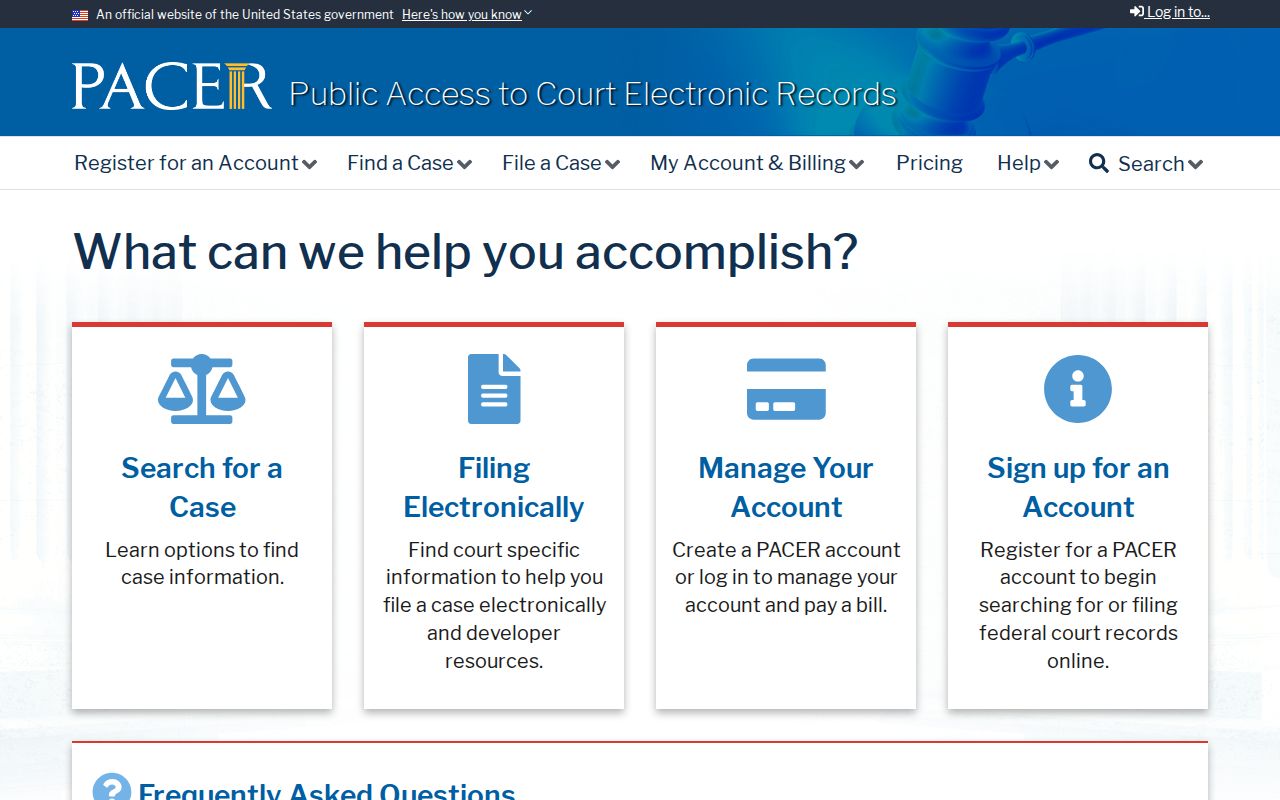
A search of Shelby County Circuit or District records does not cover a federal prosecution, so the jurisdiction must be confirmed first.
Shelby County Criminal Bookkeeping
The clerk's criminal bookkeeper handles the money side of Shelby County criminal court cases. Cash bond remains on the account until disposition and may be applied to amounts the court says are due. Restitution is sent out as funds come in. Unclaimed money older than five years transfers to the County General Fund under the clerk's stated process.
A payment ledger is not a complete judgment. It can show fines, costs, restitution, bond activity, or program fees, but the case-action summary and disposition explain why those entries exist. The criminal appeals and bookkeeping line is 205-670-5269. A reader seeking a certified result should name the case and count, not ask staff to infer the outcome from the balance.
Access & Restrictions
Rule 33 of the Alabama Rules of Judicial Administration preserves inspection of physical clerk records even though electronic court data is paid. Alabama residents also have a general inspection right under the Alabama Open Records Act, chiefly Alabama Code section 36-12-40, unless a more specific restriction applies.
Online and paper files can omit or redact Social Security numbers, full financial-account data, protected victim information, and other sensitive identifiers. Juvenile and youthful-offender matters are not part of ordinary public access. Sealed and expunged Shelby County case records also will not appear in the usual search. Rules 5.1 and 301 of Alabama's Rules on Privacy and Confidentiality govern redaction and court sealing.
A sealed record and an expunged record are not the same thing. Rule 301 sealing requires a hearing and written findings. Alabama Code Chapter 15-27 supplies the separate expungement process for eligible matters. Staff can explain filing and copy procedures, but only the current law and a court order determine whether a Shelby County record is restricted.
For a broad county criminal-history overview, the Shelby County criminal history resource explains how court, jail, warrant, and state repository records differ.